
 Canada
 Alberta
 British Columbia
 Manitoba
 New Brunswick
 Newfoundland Labrador
 Nova Scotia
 Ontario
 Prince Edward Island
 Quebec
 Saskatchewan
 United States
 Belgium
 France
 Italy
 Switzerland
Elsewhere
 Elsewhere
According to the new Rome V criteria (2026), the global prevalence of irritable bowel syndrome (IBS) is estimated at 8.5%, consistent with the approximately 10% prevalence observed in Canada using the Rome III criteria. IBS has a substantial impact on working life: in a Canadian survey involving nearly 3,000 people with IBS, 46% reported missing work because of their symptoms. IBS can also significantly impair quality of life, to a degree comparable to that seen in certain serious chronic diseases.
The low-FODMAP diet is the most extensively studied dietary intervention for IBS. This approach significantly reduces gastrointestinal symptoms and improves patients’ quality of life, with response rates reaching 70% or higher in some studies, provided the protocol is followed correctly. The goal is to identify which FODMAPs a patient tolerates poorly, and in what amounts, so that all well-tolerated foods can subsequently be reintroduced. Clinical guidelines from Canadian, American, and British gastroenterology associations recognize the low-FODMAP diet as an established therapeutic option for IBS.
The FODMAP protocol consists of three phases: elimination, reintroduction challenges, and dietary personalization. The first two phases generally take 8 to 12 weeks total, while the third continues over the long term. Following the protocol requires careful adherence to specific instructions and ideally involves guidance from a dietitian specializing in IBS. However, access to this expertise remains limited, particularly in the public healthcare system and in certain regions. Furthermore, many patients fail to reintroduce foods they could tolerate, partly because they lack effective tools to do so. As a result, they may remain on a restrictive diet over the long term, potentially reducing dietary diversity and adversely affecting their gut microbiota. In short, this effective dietary intervention is not accessible to everyone who could benefit from it.
The SOS FODMAP Wizard™ is intended for patients with diarrhea-predominant IBS (IBS-D), mixed IBS (IBS-M), or constipation-predominant IBS (IBS-C) who experience symptoms affecting their quality of life — particularly bloating and abdominal pain — and are willing to undertake a structured dietary approach.
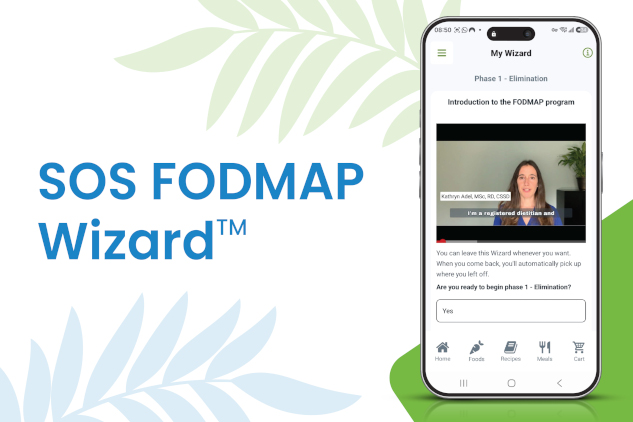
The Wizard is a mobile application that provides daily guidance to help patients correctly follow all three phases of the FODMAP protocol. Explanations and instructions are delivered in small, manageable bites, at just the right time, through short videos recorded by specialized dietitians. This helps prevent cognitive overload and reduce errors.
Whenever patients have questions or doubts, a support group moderated by specialized dietitians is available at all times. During the restriction period (phases 1 and 2), patients have access to lists of foods to eat and foods to avoid, along with low-FODMAP recipes and complete meals, supported by a cart and automatically generated grocery list.




Leave a Reply